
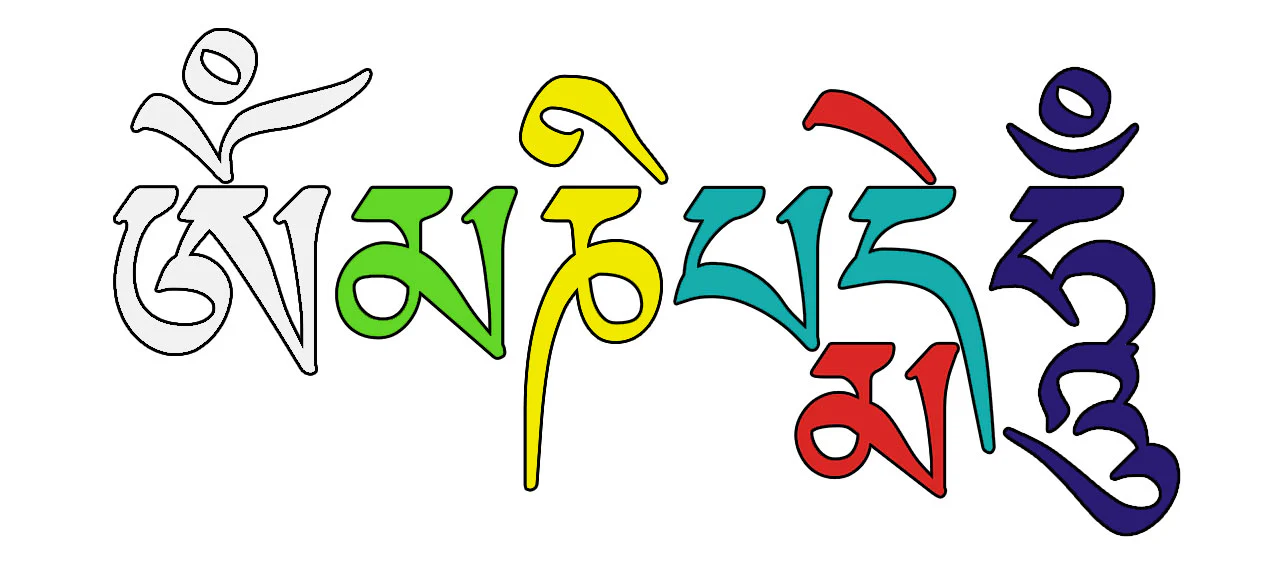
Om Mani Padme Hum is the most widely recited mantra in Tibetan Buddhism and is deeply associated with Chenrezig (Avalokiteśvara), the Bodhisattva of Compassion. For centuries, Tibetans have recited this sacred six-syllable mantra as an expression of compassion, wisdom, purification, and spiritual transformation.
Although the mantra is often loosely translated as “The Jewel in the Lotus,” its meaning is far deeper than a literal translation. According to His Holiness the 14th Dalai Lama, the mantra represents the path through which an ordinary person can transform their impure body, speech, and mind into the enlightened qualities of a Buddha through the inseparable union of compassion and wisdom.
Each syllable carries profound symbolic meaning:
Om (ཨོཾ) symbolizes the impure and pure states of body, speech, and mind.
Mani (མ་ཎི) meaning “jewel,” represents compassion, altruism, love, and the intention to attain enlightenment for the benefit of all beings.
Padme (པདྨེ) meaning “lotus,” symbolizes wisdom and purity. Just as the lotus flower rises unstained from muddy water, wisdom remains undefiled by ignorance and attachment.
Hum (ཧཱུྃ) symbolizes indivisibility and the union of compassion and wisdom.
In Tibetan Buddhism, compassion and wisdom are considered the two essential qualities needed for enlightenment. Compassion without wisdom may become attachment, while wisdom without compassion may become cold or incomplete. Therefore, the mantra teaches the harmonious balance of both.
Many Tibetan masters also explain that the six syllables purify the six negative emotions (pride, jealousy, desire, ignorance, greed, and anger) while simultaneously helping practitioners cultivate the six perfections (generosity, ethics, patience, perseverance, concentration, and wisdom).
Beyond its philosophical meaning, Om Mani Padme Hum serves as a living spiritual practice. Tibetans chant it during meditation, prayer, pilgrimage, and daily life to cultivate compassion for all sentient beings. The mantra can be found engraved on prayer wheels, mani stones, monasteries, and mountain paths throughout Tibet and the Himalayan regions, reflecting its central place in Tibetan culture and spirituality.
Ultimately, Om Mani Padme Hum is not merely a sequence of sacred sounds, but a profound reminder to develop compassion, wisdom, inner purity, and the aspiration to benefit all living beings.