
Universal Prayer Day, known in Tibetan as Dzamling Chisang (འཛམ་གླིང་སྤྱི་བསང་།), is one of the most important traditional observances in Central Tibet. It is celebrated on the 15th day of the fifth month of the Tibetan lunar calendar ( བོད་ཟླ་ལྔ་པའི་ཚེས་བཅོ་ལྔ།), a day dedicated to offering prayers and purification rituals for the well-being of all beings, the flourishing of the Dharma, and harmony between humans and the spiritual world.
The origins of this festival date back to the 8th century during the reign of King Trisong Detsen, when Buddhism was firmly established in Tibet. According to Tibetan tradition, the king invited the Indian abbot Shantarakshita and the great tantric master Guru Padmasambhava to Tibet. During this period, Guru Padmasambhava subdued the local spirits and protective deities that were obstructing the spread of Buddhism and bound them by oath to protect the Dharma.
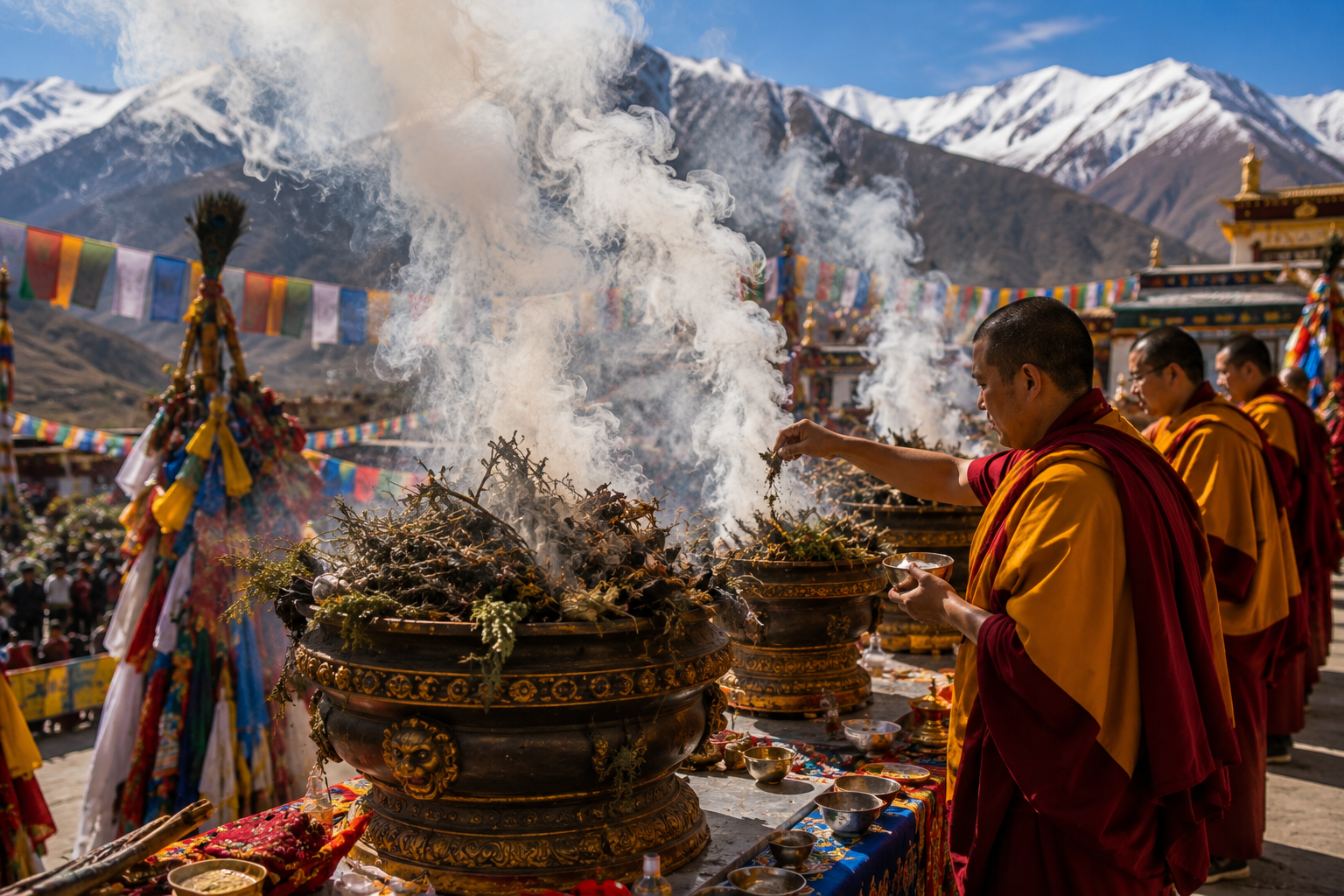
These newly sworn protectors are believed to have assisted in the construction of Samye Monastery, Tibet’s first Buddhist monastery. While human workers labored during the day, the deities and spirits were said to continue the work throughout the night, enabling the monastery to be completed remarkably quickly. To commemorate this achievement and express gratitude to the protector deities, Guru Padmasambhava performed a grand purification and smoke offering ceremony on the summit of Hespo Ri (Hespo Mountain ཧས་པོ་རི།) Mountain near Samye. This ritual later became the foundation of the annual Dzamling Chisang (འཛམ་གླིང་སྤྱི་བསང་།) celebration.
Another historical explanation connects the festival to King Mune Tsenpo (མུ་ནེ་བཙན་པོ།), the son of King Trisong Detsen (ཁྲི་སྲོང་ལྡེ་བཙན།). According to traditional accounts, the king attempted several social reforms aimed at reducing economic inequality. When these efforts proved unsuccessful, religious masters advised him to establish major offerings dedicated to the Three Baskets of Buddhist teachings. These included offerings associated with Lhasa, Khar-druk, and Samye. Dzamling Chisang is also regarded as a continuation of the offering tradition associated with Lhasa.
Historically, the festival was observed on a grand scale throughout Central Tibet, especially in Lhasa. During the Tibetan government period, an important Summer Offering ceremony was conducted on an auspicious day during the waxing phase of the fifth lunar month. Government officials gathered to make offerings and seek guidance from state protector deities, including Nechung Oracle and other guardian deities responsible for the welfare of Tibet. Prayers were offered for the flourishing of Buddhism, the stability of the government, and the well-being of the Tibetan people.
The festival also coincided with one of the most pleasant times of the year in Lhasa. The weather became warm, flowers blossomed, trees were covered with fresh leaves, and the rainy season began to arrive. Markets filled with seasonal produce, agricultural work became less demanding, and families gathered outdoors to celebrate. On the fifteenth day itself, people dressed in their finest traditional clothing and visited temples, sacred sites, riverbanks, mountain tops, and parks throughout the city. Offerings of incense, prayer flags, and smoke offerings were made to local deities and protector spirits. Many families organized picnics and social gatherings, often staying in tents for several days while enjoying food, music, singing, and traditional dances.
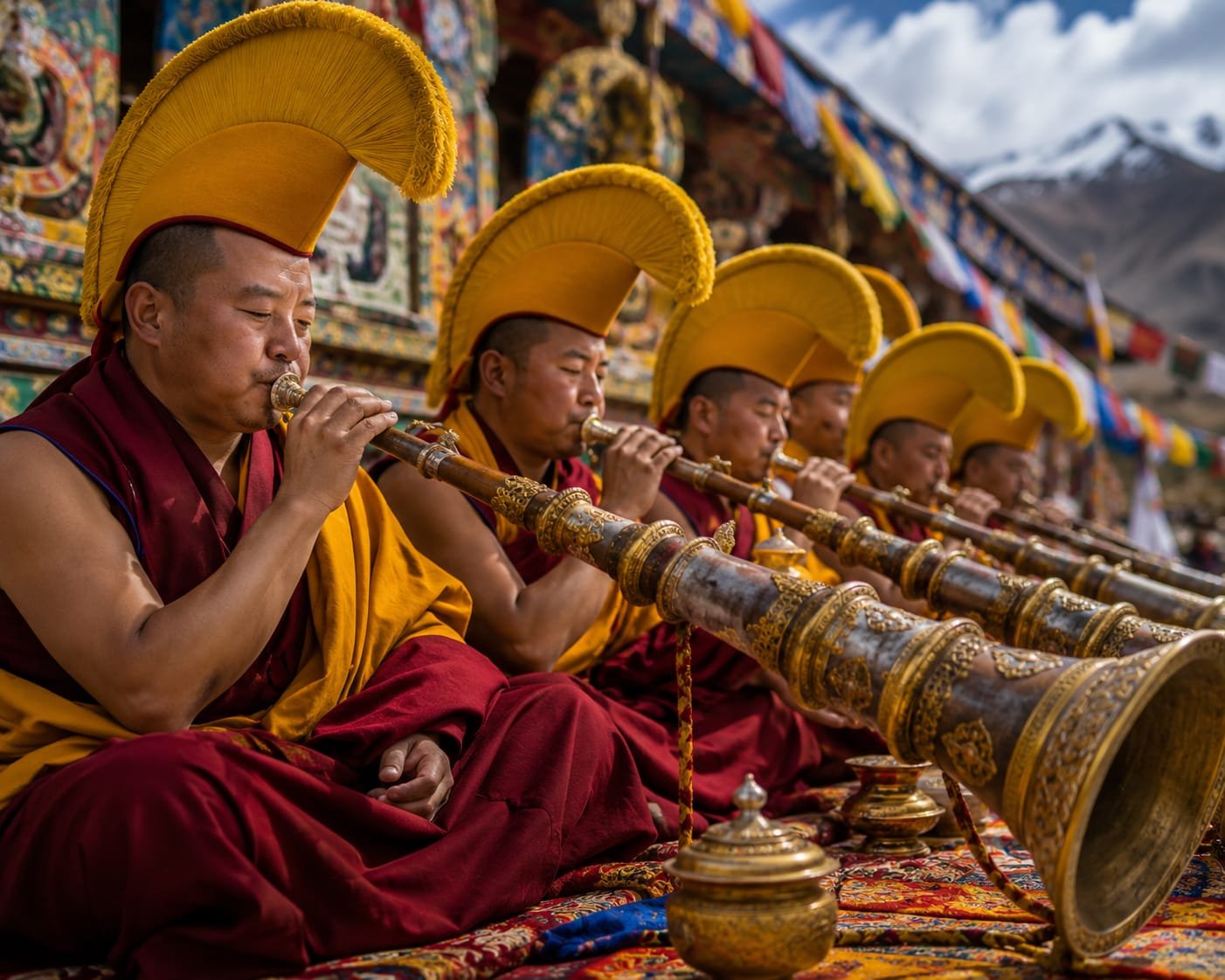
Particularly famous were the celebrations held in Karma Shak Lingka on the eastern side of Lhasa, where large tents were erected and religious ceremonies were performed. Oracles and protector deities associated with various temples were invited to participate in the festivities. Traditional songs, dances, and ceremonial offerings created a joyful atmosphere that brought together people from all walks of life.
For Tibetans, Dzamling Chisang is not merely a cultural festival. It is a day of purification, gratitude, and spiritual renewal. Through offerings, prayers, and acts of generosity, people seek to purify negative karma, accumulate merit, strengthen their connection with the Dharma, and pray for peace and prosperity throughout the world.
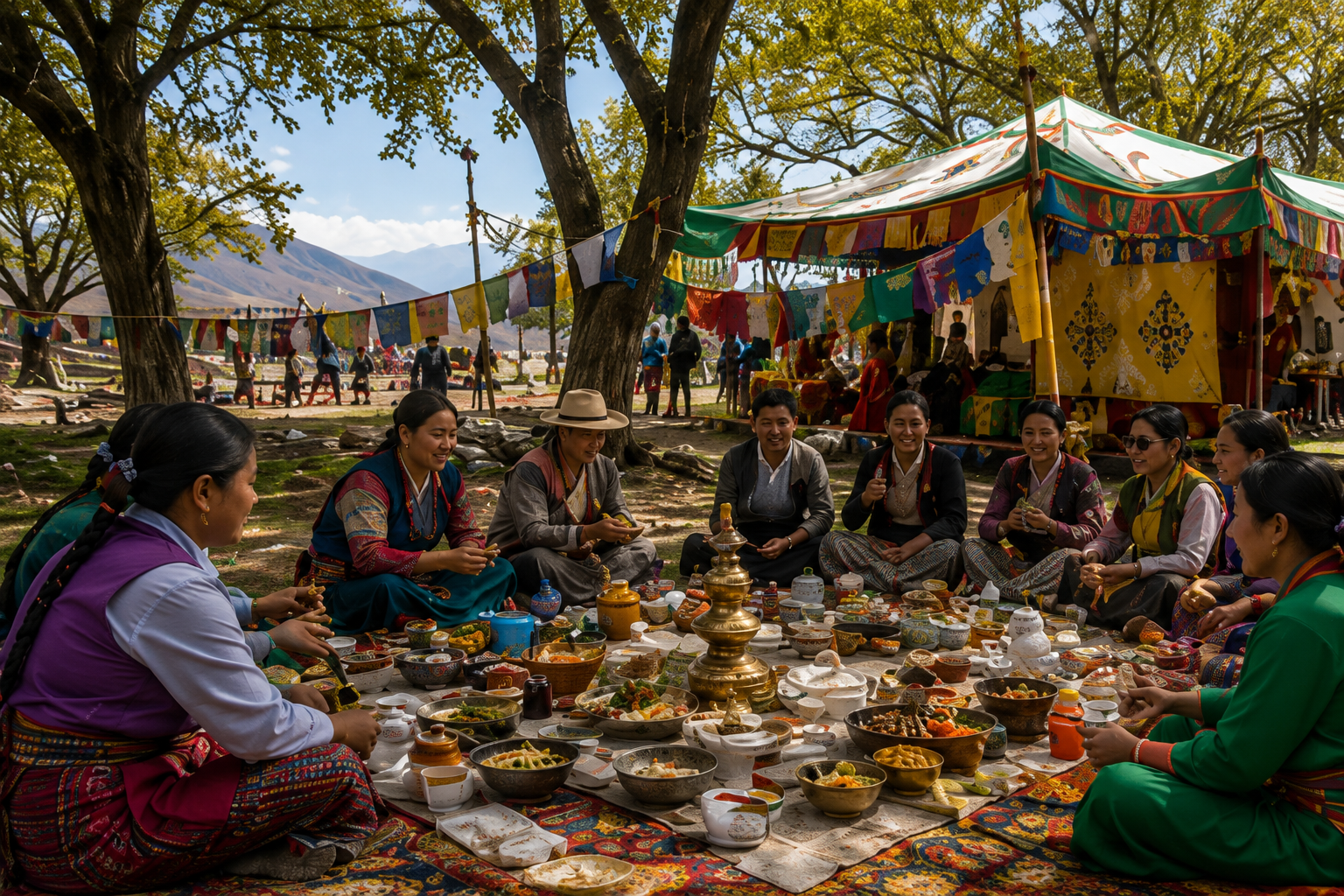
The festival also coincided with one of the most pleasant times of the year in Lhasa. The weather became warm, flowers blossomed, trees were covered with fresh leaves, and the rainy season began to arrive. Markets filled with seasonal produce, agricultural work became less demanding, and families gathered outdoors to celebrate. On the fifteenth day itself, people dressed in their finest traditional clothing and visited temples, sacred sites, riverbanks, mountain tops, and parks throughout the city. Offerings of incense, prayer flags, and smoke offerings were made to local deities and protector spirits. Many families organized picnics and social gatherings, often staying in tents for several days while enjoying food, music, singing, and traditional dances.
Today, Dzamling Chisang continues to be celebrated by Tibetans both inside Tibet and throughout Tibetan communities around the world. The festival serves as a living reminder of Tibet’s rich spiritual heritage and the enduring legacy of Guru Padmasambhava’s efforts to establish Buddhism in the Land of Snow.