Module 6 – Pronouns and Auxiliary Verbs
This lesson introduces the fundamental structure of Tibetan sentence formation through pronouns and auxiliary verbs. You will begin by learning the three grammatical persons in Tibetan and understanding how they are used in everyday communication. From there, you will explore how to express “to be” and “to not be” in both the first and third […]
Module 5 – Spelling & Reading Practice: Days, Colors, Numbers, Months & Seasons

This lesson focuses on strengthening your Tibetan spelling and reading skills through practical and everyday vocabulary. You will learn how to spell (སྦྱོར་ཀློག Jorlok) and correctly read a variety of commonly used Tibetan words and expressions, helping you become more confident and fluent in reading Tibetan naturally. Throughout the lesson, you will study the days […]
Module 4 – Prefixes / Suffixes / Post-Suffixes

This lesson introduces the essential components of Tibetan word formation: prefixes, suffixes, and post-suffixes. You will begin by learning the five Tibetan prefixes and understand how they are attached to root letters to influence spelling, pronunciation, and meaning, supported by clear examples for each one. Next, you will explore the ten suffixes used in Tibetan […]
Module 3 – Three Superscript Letters & The Four Subscript Letters
This lesson introduces one of the most important structural systems in the Tibetan language: superscript letters, subscript letters, and stacked letter formations. You will begin by learning the three superscript (surmounted) letters in Tibetan — ར་མགོ་ (RaGo), ལ་མགོ་ (LaGo), and ས་མགོ་ (SaGo) — and understand how they modify pronunciation and spelling through practical examples. Next, […]
All In One – Tibetan Master Course for Beginners
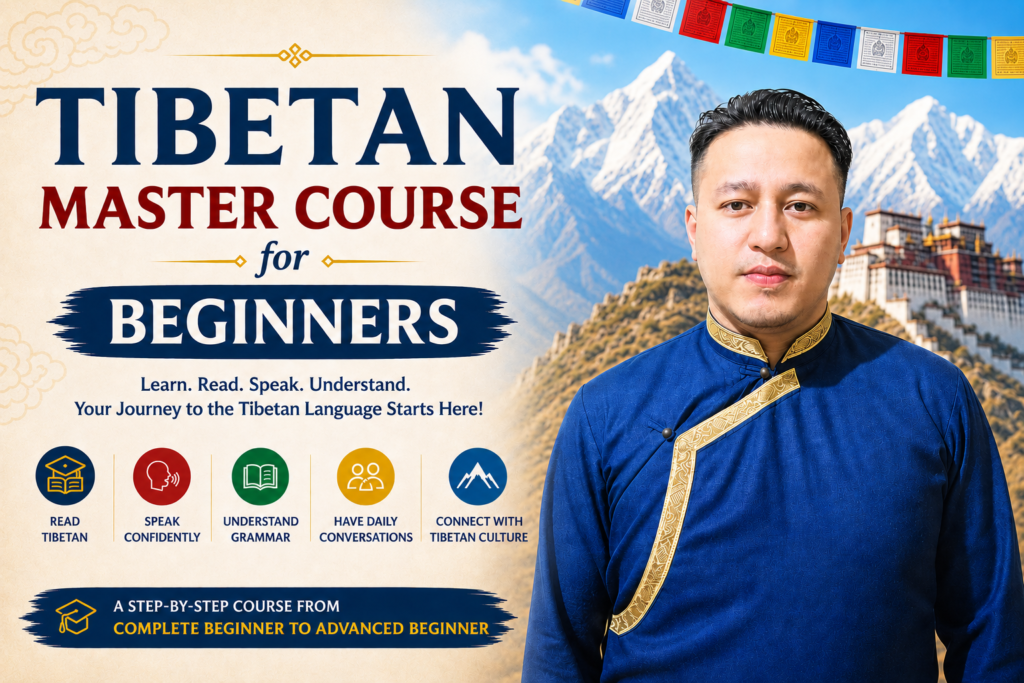
Tibetan Master Course for Beginners Begin your journey into the Tibetan language with a complete step-by-step course designed especially for beginners. This course starts entirely from scratch and gradually guides students up to the A1 level, making Tibetan learning simple, structured, and accessible for everyone. Whether you are interested in Tibetan culture, Buddhism, travel, or […]